CS2 Pattern Index Explained: Why Some Skins Cost 100x More (Blue Gems, Fade %, Doppler Phases)
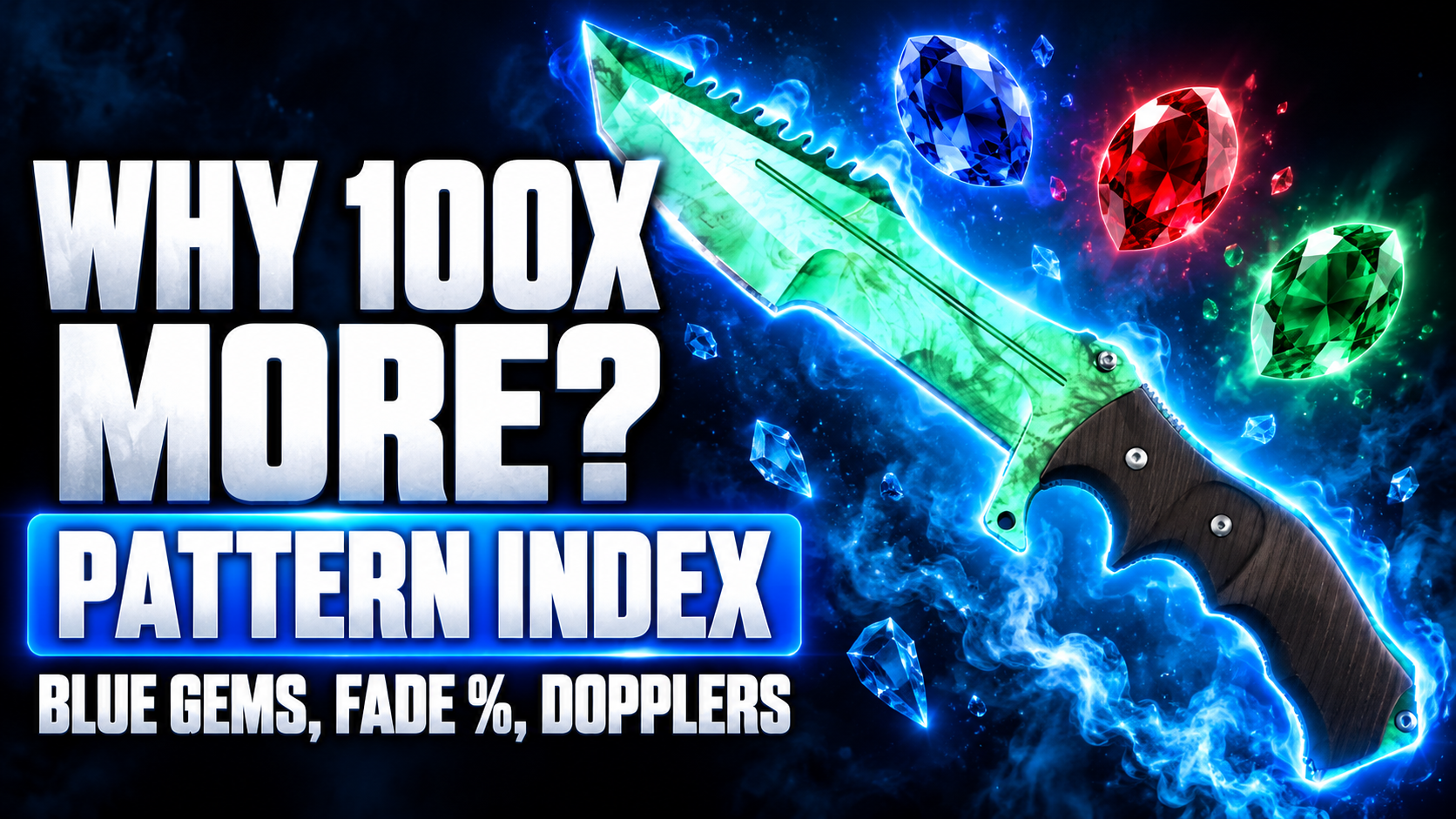
Two AK-47 Case Hardened skins. Same wear, same float range, same everything on paper. One sells for the price of a decent lunch. The other sells for more than a car.
The difference is a single number called the pattern index. For most skins it barely matters. For a handful, it’s the reason people spend years hunting for one exact copy.
Here’s how pattern index works, which skins it actually matters on, and how to avoid paying a “rare pattern” price for a very normal skin.
What Is a Pattern Index?
When a skin drops, it gets two permanent numbers. One is the float value, which controls how worn it looks. The other is the pattern index, also called the paint seed or pattern template.
Each skin design is painted from one big texture sheet. The pattern index decides which part of that sheet gets placed on your weapon, and at what angle. Different section, different look.
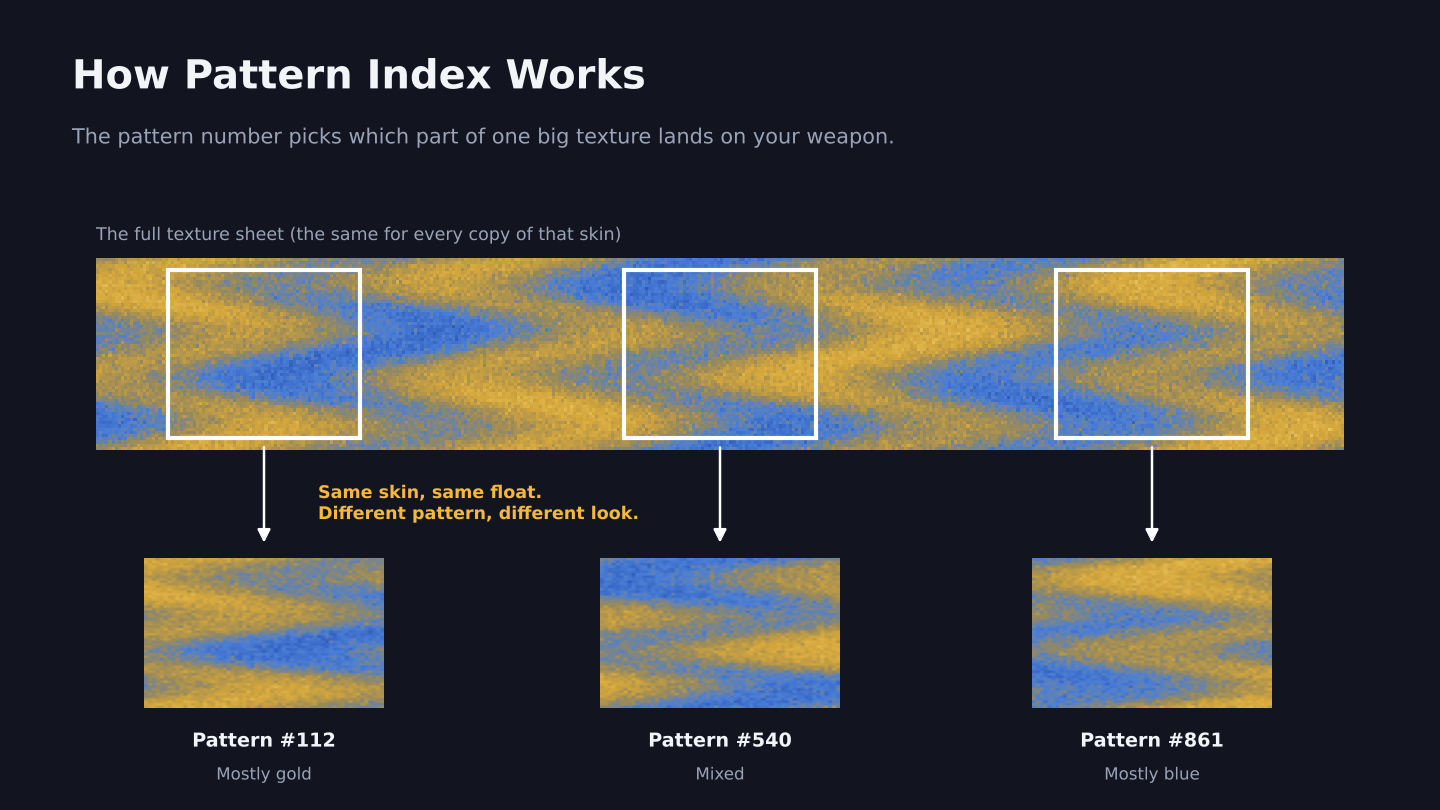
The pattern index decides which part of the skin’s texture ends up on your weapon (file: cs2-pattern-index-explained.png)
There are about a thousand possible patterns for each skin. Like float, the pattern never changes after the skin drops.
Float vs Pattern: What’s the Difference?
| Float Value | Pattern Index | |
| What it controls | How worn the skin looks | Which part of the design shows |
| Range | 0.00 to 1.00 | Roughly 1,000 possible patterns |
| Matters on | Every skin | Only some skins |
| Changes over time | Never | Never |
On most skins, the pattern only shifts things around a little. You’d need to hold two copies side by side to notice. But on skins built from a big, uneven texture, the pattern can change the look completely.
The Skins Where Pattern Really Matters
Case Hardened (the “Blue Gem” skins)
Case Hardened is the most famous pattern-based finish in CS2. It’s a mix of blue, gold and purple metal, and the amount of blue depends entirely on the pattern.
Most Case Hardened patterns are mostly gold with some blue. A rare few are almost fully blue on the visible side of the weapon. Players call these “blue gems,” and they sell for huge multiples of a normal copy.
The best-known example is the AK-47 Case Hardened with pattern 661, often called the number one blue gem. Copies of that exact pattern have sold for prices that sound made up.
What makes a blue gem valuable:
- How much of the weapon is blue
- Whether the blue is on the playside (the side you see while playing)
- Whether the top of the weapon or the blade is blue
- Which weapon or knife it’s on
Fade
Fade skins blend from one color into another, usually pink, purple, yellow and blue. The pattern decides how much of the weapon shows the bright colors and how much shows the darker end.
Players describe this as a fade percentage. A higher fade percentage means more of the colorful part is visible. A 100% fade on a popular knife can cost much more than an 80% fade of the same knife.
Doppler Phases
Doppler skins are a little different. Their phases aren’t decided by the pattern number. Each phase is its own separate finish, so a Phase 2 Doppler is always Phase 2, no matter the pattern.
| Doppler Type | Colors | Rarity and Value |
| Phase 1 | Mix of purple and blue on a dark base | Standard |
| Phase 2 | Lots of pink and purple | Usually the most popular standard phase |
| Phase 3 | Dark blue and black, sometimes green | Often the cheapest phase |
| Phase 4 | Mostly blue with purple touches | Standard |
| Ruby | Solid red | Rare, very expensive |
| Sapphire | Solid bright blue | Rare, very expensive |
| Black Pearl | Dark purple and black with a shine | Rare, very expensive |
| Emerald (Gamma Doppler) | Solid green | Rare, very expensive |
Ruby, Sapphire, Black Pearl and Emerald are called gem phases. Within any phase, the pattern still affects where the colors sit, which can add a smaller premium.
Marble Fade
Marble Fade knives mix red, blue and yellow. The most wanted pattern is Fire and Ice, where the visible part of the blade is only red and blue with no yellow. Perfect Fire and Ice patterns carry a big premium.
Crimson Web and Slaughter
On Crimson Web, buyers want webs that are centered and clearly visible, especially on knives. On Slaughter, players hunt for shapes in the pattern, like diamonds, hearts and “angels.” A centered diamond on the playside is one of the most wanted looks.
How to Check a Skin’s Pattern
- Find the skin’s inspect link on the market listing or in your inventory.
- Paste it into a well-known float and pattern checker tool. It shows the exact float and pattern number.
- Look up that pattern in a pattern database for that skin, or compare it against reference screenshots.
- Inspect it yourself in game and rotate it. Your eyes are the final check.
How to Avoid Getting Ripped Off
Sellers love the word “rare.” Before paying extra for a pattern:
- Check the number yourself. Never trust a screenshot or a pattern number written in a listing title.
- Remember that most patterns are ordinary. For the vast majority of skins, pattern makes no real difference to price.
- Look at the playside. A pattern that’s blue on the side you never see is worth much less.
- Compare real sales. Look at what similar patterns actually sold for, not what people are asking.
- Be extra careful with big trades. High value pattern skins attract scammers. Our guide on how to sell skins safelycovers the basics.
FAQs
What is pattern index in CS2?
It’s a permanent number every skin gets when it drops. It decides which part of the skin’s texture appears on the weapon.
Does pattern index matter for every skin?
No. It matters a lot on Case Hardened, Fade, Marble Fade, Crimson Web, Slaughter and a few others. On most skins the difference is tiny.
What is a blue gem in CS2?
A Case Hardened skin with a pattern that shows mostly blue on the visible side. The AK-47 Case Hardened pattern 661 is the most famous example.
Does the pattern decide the Doppler phase?
No. Each Doppler phase is its own finish. The pattern only shifts where the colors sit.
Can I change the pattern on my skin?
No. Like float, it’s fixed forever.
If pattern skins are making your wallet nervous, our list of the cheapest good-looking knives in CS2 is a gentler place to start. And to understand the other hidden number on every skin, read our guide to CS2 float values.